
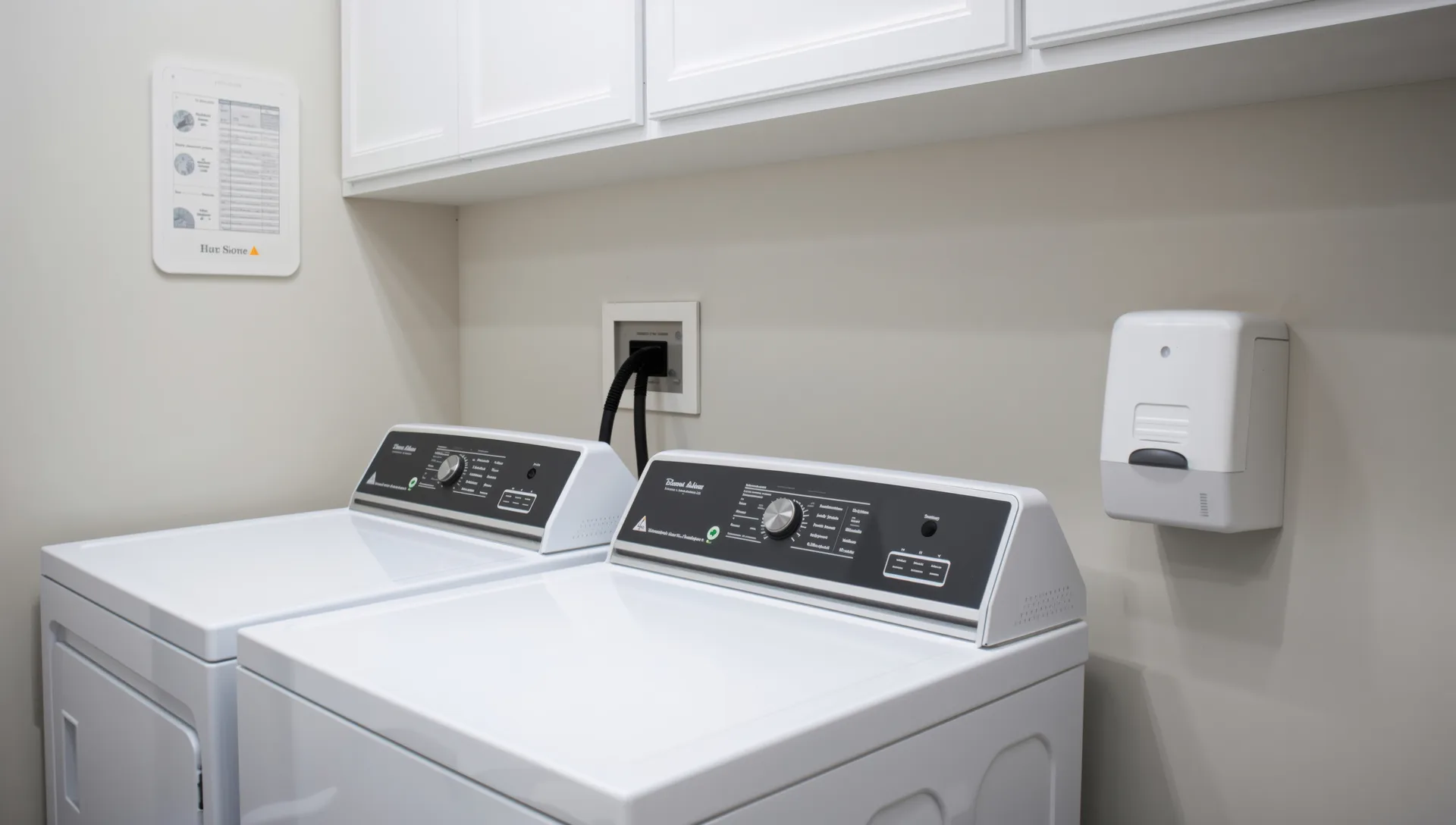
The Short Answer
Unplug the dryer, pull it forward, and detach the duct from the wall and machine. Run a rotary vent brush through the full length from both directions, vacuum the loosened lint, clear the exterior flap of debris and nests, then reconnect with foil tape — never screws, which snag lint. Do it yearly, and treat two-cycle drying or a hot cabinet as a signal to do it now.
Five Signs Your Vent Is Already Blocked
A clogging duct announces itself long before it becomes dangerous. Fire-prevention agencies across Canada consistently rank lint-choked dryer exhaust among the leading causes of residential laundry fires — and every one of those fires gave warnings like these first:
| What You Notice | What It Means |
|---|---|
| Loads need two or more cycles | Moist air has nowhere to go, so it recirculates through the drum |
| The dryer top is hot to the touch | Trapped heat is baking the cabinet instead of exiting the duct |
| A burning smell during operation | Lint resting on the heating element — treat this as urgent |
| The outside flap barely moves | Airflow too weak to push the damper open; the duct is choked |
| Laundry room feels humid mid-cycle | Exhaust is leaking back indoors instead of venting out |
The Cleaning, Step by Step
- Cut power and gas. Unplug electric models; close the gas valve on gas dryers before disturbing anything behind the machine.
- Walk the dryer forward. Rock it corner to corner until you can work behind it, then loosen the clamp holding the duct to the exhaust collar.
- Brush the full run. Feed a rotary vent brush (hardware stores sell flexible-rod kits) through the wall duct, extending rod by rod until you feel it reach the exterior hood. Work it in from the outside end too — blockages concentrate at bends.
- Vacuum everything. The wall opening, the flex duct, the dryer's own exhaust collar, and the floor behind the machine — loosened lint left behind defeats the exercise.
- Inspect before reconnecting. Crushed or torn flex duct gets replaced, not taped over — and if yours is white vinyl, replace it regardless; only rigid or semi-rigid metal duct is safe behind a dryer.
- Seal with foil tape. Screws poking into the airstream become lint anchors; UL-listed foil tape seals the joints without giving lint anything to catch on.
“We have pulled bird nests, a hockey sock, and eleven years of lint out of one Sherwood Park duct — the dryer itself was fine.”
Field note — The Technician Team
Don't Forget the Outside End
The exterior hood is the vent's only defence against weather and wildlife, and it fails quietly. Confirm the damper swings freely, clear any lint beard hanging from the opening, and evict the debris that collects behind it — in our service area, wasp activity and springtime nesting birds are regulars. While the dryer runs, hold a hand at the hood: strong, warm, steady airflow is the pass mark. Weak flow after a fresh interior clean points to a blockage inside a wall or roof section, which is exactly where DIY should stop.
When the Job Needs a Pro
Roof-terminated vents, duct runs past five metres, multiple hidden bends, or any burning smell that survives a cleaning: those cases call for powered rotary equipment and a technician who can measure static pressure rather than guess. Vent service is part of every dryer repair we complete in Sherwood Park, and available on its own — because a clean duct is cheaper than the insurance deductible it prevents. If your clothes are still coming out damp after the vent work, the damp-clothes diagnostic bulletin covers what to rule out next.
Vent Questions, Answered
How often does a dryer vent need cleaning?
Once a year for a typical household, twice for families drying a load daily, homes with pets, or duct runs longer than about five metres with multiple bends. The lint screen, by contrast, gets cleared before every single load — no exceptions.
Can I clean the dryer vent without moving the dryer?
Partially. A rotary brush kit fed in from the exterior opening can clear most of a short, straight run without touching the machine. But the joint where the flex hose meets the dryer collects the densest lint, and reaching it means pulling the unit forward — a two-person job worth doing at least annually.
What is the difference between the lint trap and the vent?
The lint trap is the removable screen inside the door or on top of the dryer — it catches maybe three-quarters of the lint. The vent is the duct behind the machine carrying exhaust outdoors, and it collects everything the screen misses. Cleaning the screen daily does not substitute for cleaning the duct yearly.