
The Short Answer
If the microwave runs, lights, and spins but the food stays cold, the high-voltage side has failed — almost always the magnetron, sometimes the diode or capacitor. The low-voltage parts (turntable, light, fan) keep working, which is why it looks healthy. Check the outlet, door latch, and control lock yourself; leave anything inside the cabinet to a technician, because the capacitor holds a dangerous charge even unplugged.
Why Everything Works but the Heat
A microwave really contains two electrical worlds. The low-voltage side spins the turntable, lights the cavity, runs the fan, and drives the display — all the signs of life you can see. The high-voltage side does exactly one thing: it powers the magnetron, the tube that actually cooks your food. When the high-voltage side fails, every visible sign of life continues while the heat quietly disappears. That specific mismatch — looks fine, cooks nothing — is the fingerprint of a magnetron or diode failure.
The Parts Lineup
| Component | The Tell | Worth Knowing |
|---|---|---|
| Magnetron | Everything runs normally but no heat at all — the single most common cause | The tube that actually generates the microwaves; it wears out with use |
| High-voltage diode | No heat, sometimes with a low humming or buzzing | A cheap part whose failure often mimics a dead magnetron |
| Capacitor | No heat, occasionally a blown fuse alongside | Stores the lethal charge — the reason this is never DIY |
| Door interlock switch | Dead or won’t start, not just no heat | Three switches must agree the door is shut before it runs |
| Line fuse | Completely dead after a power event or door slam | A one-time safety device that sacrifices itself |
The Safe Checks First
Before booking, rule out the free causes from outside the cabinet: test the outlet, reset the breaker, and make sure the door clicks fully shut — a door the interlocks read as open will stop heating even when everything else seems normal. Also confirm you are not on a low-power or defrost setting, and that no child-lock is engaged. If all of that is clear and the food is still cold, the diagnosis has moved behind the panel.
“A magnetron replacement is a twenty-minute job — the other nineteen minutes are safely bleeding off the capacitor first.”
Field note — The Technician Team
Why This One Isn't DIY
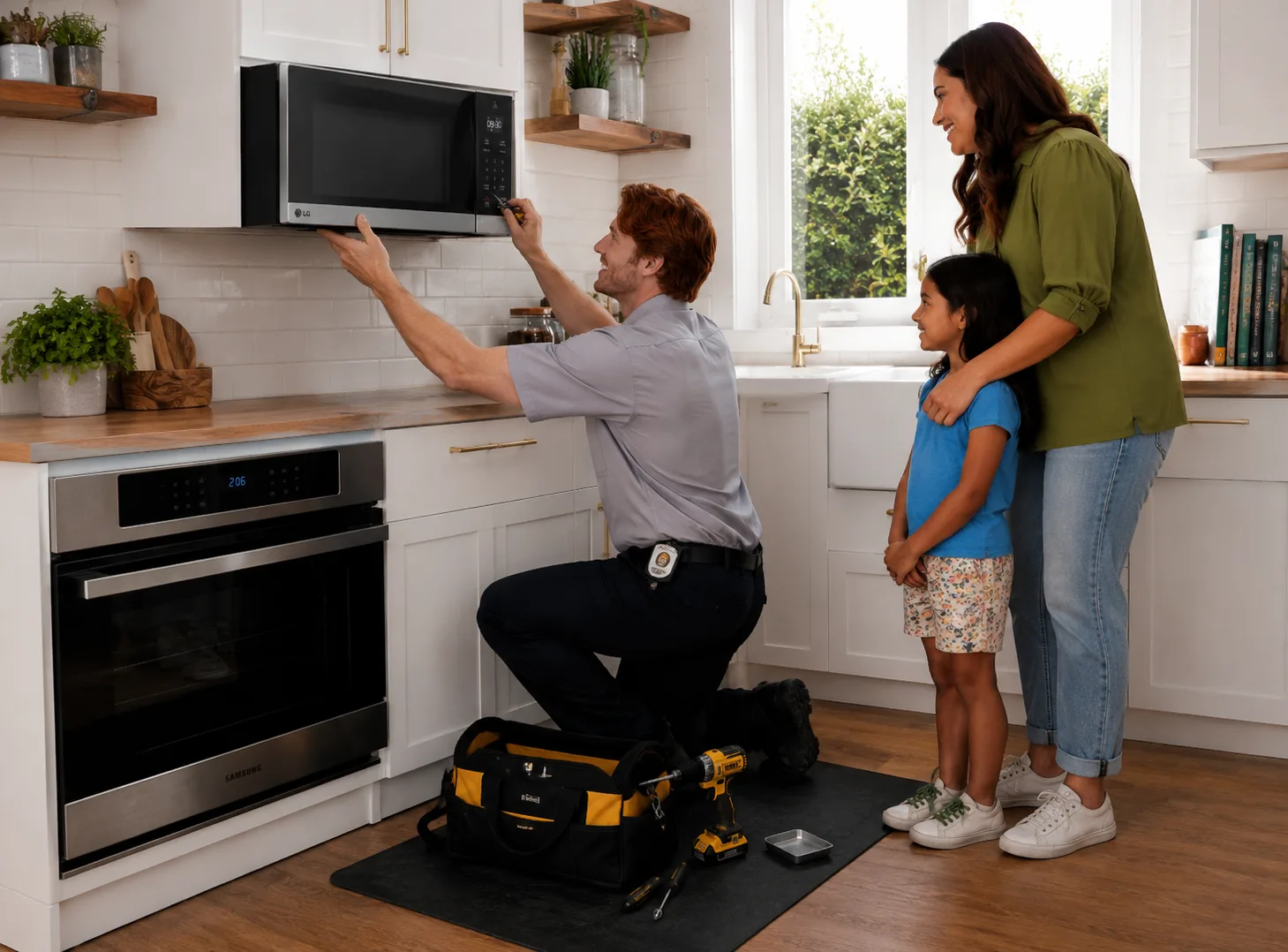
The capacitor inside a microwave can store enough charge to seriously injure or kill, and it holds that charge for a long time after the cord is pulled. There is no safe way for a homeowner to reach the magnetron without first discharging it, which is why our Sherwood Park microwave repair technicians handle every internal fault — trained tools, stocked parts, and a 90-day warranty. The wider map of microwave symptoms lives in the troubleshooting index.
No-Heat Questions, Answered
Why does my microwave run but not heat the food?
Because the part that generates the heat — the magnetron — or the high-voltage diode or capacitor feeding it has failed, while the turntable motor, light, and fan (all low-voltage) keep working normally. That mismatch is the classic signature: everything looks fine, nothing gets hot. It is a specific, repairable fault, but strictly a technician job.
Can I replace a microwave magnetron myself?
No. Reaching the magnetron means opening the cabinet, where the capacitor can hold a dangerous charge even with the unit unplugged for days. A technician discharges it safely first, then tests and replaces the magnetron or diode. This is the one appliance repair we firmly tell homeowners not to attempt.
Is it worth fixing a microwave that won’t heat?
For an over-the-range or built-in microwave, almost always — the repair is a fraction of replacing an integrated unit. For a basic countertop model, it depends: if the magnetron repair approaches the price of a new microwave, replacement may make more sense. We quote it honestly before any work so you can decide with real numbers.