
The Short Answer
D80, D90, and D95 on an LG dryer come from Flow Sense, a pressure sensor that measures how freely exhaust air leaves the machine — the number is the approximate percentage of blockage in your duct run. The dryer itself is usually healthy: the fix is cleaning the entire vent path from the flex connector to the outside hood, which restores dry times and removes a real fire risk. A code that persists after a verified-clean vent means a crushed hose, an over-long duct run, or a drifting sensor — all worth a technician's visit.
What the Numbers Mean
LG builds a pressure sensor into its dryers and calls the system Flow Sense. As lint narrows the exhaust path, back-pressure rises, and the display escalates: a bars indicator on some models, then D80, D90, and D95 — airflow roughly 80, 90, or 95 percent obstructed. It is a warning, not a shutdown, which is precisely its danger: the dryer keeps limping along, cycles stretch toward two hours, the thermostats cycle the heat on and off, and the duct keeps packing tighter. Treat D80 as a maintenance deadline, not a suggestion.
Why the Lint Screen Isn't It
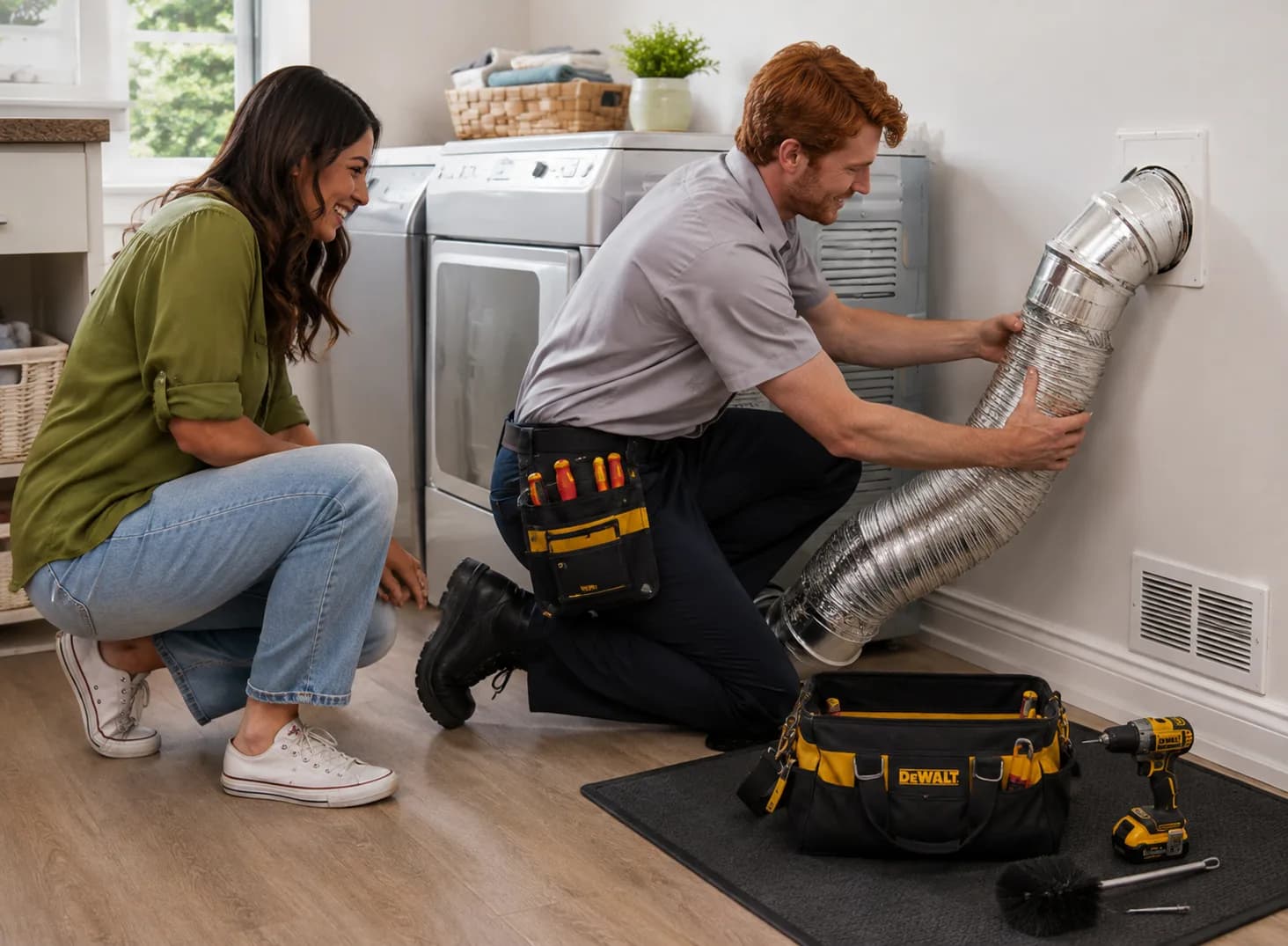
The first thing every owner does — clean the lint screen — is the one thing Flow Sense isn't measuring. The screen catches lint before the blower; the sensor reads the pressure after it, in the duct run you can't see: the flex connector behind the machine, the rigid duct through the wall or roof, and the hood outside. That's where years of escaped lint mats into felt. Clearing it properly means disconnecting the dryer and brushing or power-whipping the full run — the job our dryer vent cleaning service exists for.
“D80 is the politest fire warning an appliance will ever give you. The impolite version involves the fire department.”
Field note — The Technician Team
The Alberta Factor
Local geography writes itself into this code. Long duct runs through basements and attics accumulate more lint per metre of travel. Outside, the vent hood's flapper collects a mat of lint behind it — and in an Edmonton-area January, exhaust moisture can freeze it half-shut, so a D80 that appears in deep winter and eases in a thaw is telling you exactly where to look. A bird nest in the hood does the same job in spring. The machine indoors gets the blame; the answer is usually on the outside wall.
When It Really Is the Dryer
A minority of D-codes survive a genuinely clean vent. The usual remaining suspects, in order: a crushed flex hose from the dryer being shoved flush to the wall (to the sensor, identical to a clog), a duct run that is simply too long or too bent for the blower to push, and — rarest — a Flow Sense sensor that has drifted and reports fiction. Each has a clean test, and none requires a new dryer. If your LG is also running cold or stopping early, that's a different story with its own bulletin — see our dryer troubleshooting guide.
Flow Sense Questions
What does D80 mean on my LG dryer?
D80 is LG’s Flow Sense system reporting that airflow through your exhaust duct is roughly 80 percent restricted. D90 and D95 mean 90 and 95 percent. The dryer keeps running — the code is a warning, not a shutdown — but drying times stretch, the machine runs hot, and lint-choked ducting is a genuine fire hazard. The fix is cleaning the full vent run, not the dryer.
I cleaned the lint filter but the D80 code is still there — why?
Because the lint screen isn’t the duct. Flow Sense measures back-pressure in the exhaust path behind the machine: the flex connector, the in-wall duct, and the outside hood — places a lint screen cleaning never touches. In Alberta, the outside flapper is a prime suspect too: lint mats behind it, and in winter it can freeze partly shut. The code clears itself once the run genuinely breathes again.
Can a D80 code appear even when the vent is clean?
Occasionally, yes. A crushed flex hose behind a dryer pushed too close to the wall reads exactly like a clogged duct, because to the sensor it is one. Runs that are too long or have too many elbows for their length trigger honest warnings as well. And rarely, the Flow Sense pressure sensor itself drifts and reports blockage that isn’t there — that’s a repair call, and we test for it rather than guessing.